- Go 81.5%
- JavaScript 15.1%
- Rust 2.2%
- Go Template 0.5%
- Makefile 0.3%
- Other 0.4%
 1a8463f7de
* fix(share): always assign the authenticated user as share owner A share's UserID was taken from the request body and only defaulted when empty, so any authenticated user could create a share attributed to another user. For playlist shares the contents are resolved in the owner's library-access context, turning the spoofed owner into an access-escalation vector in multi-library setups. Force the owner from the request context at both the service boundary and the persistence layer, ignoring any client-supplied UserID. * fix(plugins): block SSRF to private IPs resolved from hostnames The HTTP host client only checked the literal host string, so a symbolic hostname (or a trailing-dot "localhost.") resolving to a private/loopback address bypassed the SSRF guard when a plugin declared no requiredHosts. Enforce the check at dial time via net.Dialer.Control on the resolved IP, which also covers redirect hops and DNS rebinding. When an explicit requiredHosts allowlist is set, defer to it as the operator's trust decision. * fix(plugins): gate private IPs on explicit IP/CIDR allowlist entries Following review feedback: an allowlisted hostname authorizes the external service, not whatever private IP it may resolve or rebind to. Enforce the resolved-IP guard even when requiredHosts is set, permitting a private address only when a literal IP or CIDR entry explicitly covers it. This keeps "reach this external API" and "reach my internal network" as two separate, explicit operator decisions. * fix(plugins): treat unspecified addresses as private in the SSRF guard Dialing 0.0.0.0 or :: reaches the local host, so they bypassed the private/loopback check. * fix(plugins): let a bare "*" allowlist reach private addresses Plugins such as AudioMuse-AI declare requiredHosts ["*"] to reach a user-configured service on the LAN, whose address the manifest cannot know. Requiring a literal IP/CIDR entry broke them. Named hosts and subdomain wildcards still cannot resolve to private addresses. * refactor(plugins): simplify the SSRF-guarded HTTP client and release its pool Build the client directly around the guarded transport instead of replacing a throwaway one, fail closed on an unparseable dial address, and close the per-plugin transport's idle connections when the plugin unloads. Trim stale comments. * fix(plugins): stop enabling extism's unguarded http_request host function Passing requiredHosts as the extism manifest's AllowedHosts enabled extism's own http_request (pdk.NewHTTPRequest), which only glob-matches the hostname and follows redirects without re-checking, bypassing the resolved-IP SSRF guard. Plugins must use host.HTTPSend. * fix(plugins): move bundled Rust examples to the host HTTP service Extism's built-in http_request is now disabled, so the webhook and Discord examples switch to nd_pdk::host::http::send. Update the README to say host.HTTPSend is the only supported way to make HTTP requests. * fix(plugins): move the Python example to the host HTTP service coverartarchive-py used extism's built-in Http.request, which is now disabled. Call Navidrome's http_send host function instead. The plugin can no longer run under the standalone extism CLI, so drop the CLI test targets and instructions. |
||
|---|---|---|
| .devcontainer | ||
| .github | ||
| adapters | ||
| cmd | ||
| conf | ||
| consts | ||
| contrib | ||
| core | ||
| db | ||
| git | ||
| log | ||
| model | ||
| persistence | ||
| plugins | ||
| release | ||
| resources | ||
| scanner | ||
| scheduler | ||
| scripts | ||
| server | ||
| tests | ||
| ui | ||
| utils | ||
| .dockerignore | ||
| .git-blame-ignore-revs | ||
| .gitignore | ||
| .golangci.yml | ||
| .nvmrc | ||
| .octocov.yml | ||
| CODE_OF_CONDUCT.md | ||
| context7.json | ||
| CONTRIBUTING.md | ||
| Dockerfile | ||
| go.mod | ||
| go.sum | ||
| LICENSE | ||
| main.go | ||
| Makefile | ||
| Procfile.dev | ||
| README.md | ||
| reflex.conf | ||

Navidrome Music Server 








Navidrome is an open source web-based music collection server and streamer. It gives you freedom to listen to your music collection from any browser or mobile device. It's like your personal Spotify!
Note: The master branch may be in an unstable or even broken state during development.
Please use releases instead of
the master branch in order to get a stable set of binaries.
Check out our Live Demo!
Any feedback is welcome! If you need/want a new feature, find a bug or think of any way to improve Navidrome, please file a GitHub issue or join the discussion in our Subreddit. If you want to contribute to the project in any other way (ui/backend dev, translations, themes), please join the chat in our Discord server.
Installation
See instructions on the project's website
Cloud Hosting
PikaPods has partnered with us to offer you an officially supported, cloud-hosted solution. A share of the revenue helps fund the development of Navidrome at no additional cost for you.

Features
- Handles very large music collections
- Streams virtually any audio format available
- Reads and uses all your beautifully curated metadata
- Great support for compilations (Various Artists albums) and box sets (multi-disc albums)
- Multi-user, each user has their own play counts, playlists, favourites, etc...
- Very low resource usage
- Multi-platform, runs on macOS, Linux and Windows. Docker images are also provided
- Ready to use binaries for all major platforms, including Raspberry Pi
- Automatically monitors your library for changes, importing new files and reloading new metadata
- Supports lyrics from sidecar .ttml, .yaml/.yml Lyricsfile, .elrc, .lrc, .srt, .txt files and embedded TTML, Enhanced LRC, LRC, SRT, and plain-text tags (via
lyricspriority) - Themeable, modern and responsive Web interface based on Material UI
- Compatible with all Subsonic/Madsonic/Airsonic clients
- Transcoding on the fly. Can be set per user/player. Opus encoding is supported
- Translated to various languages
Translations
Navidrome uses POEditor for translations, and we are always looking for more contributors
Documentation
All documentation can be found in the project's website: https://www.navidrome.org/docs. Here are some useful direct links:
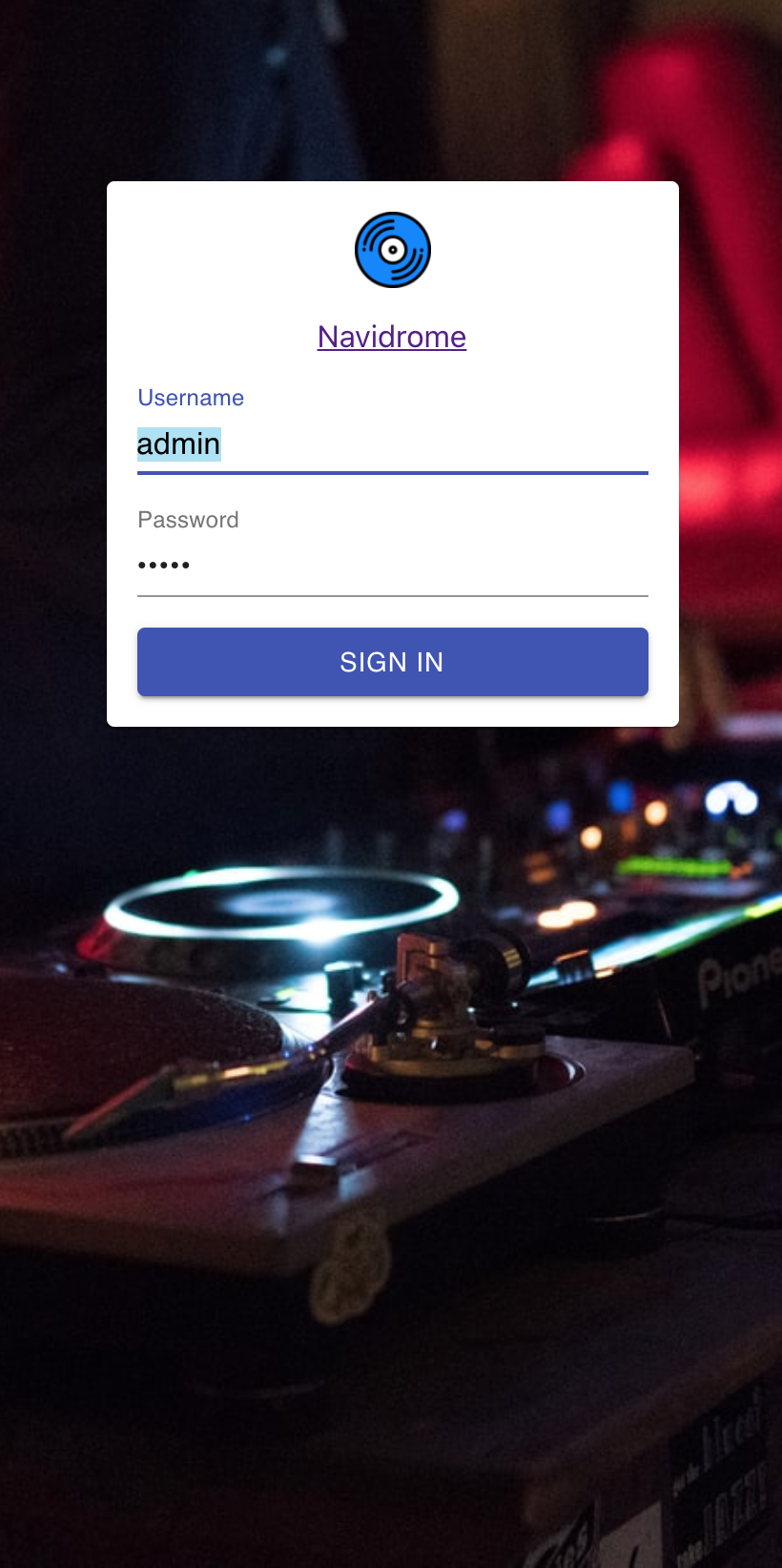
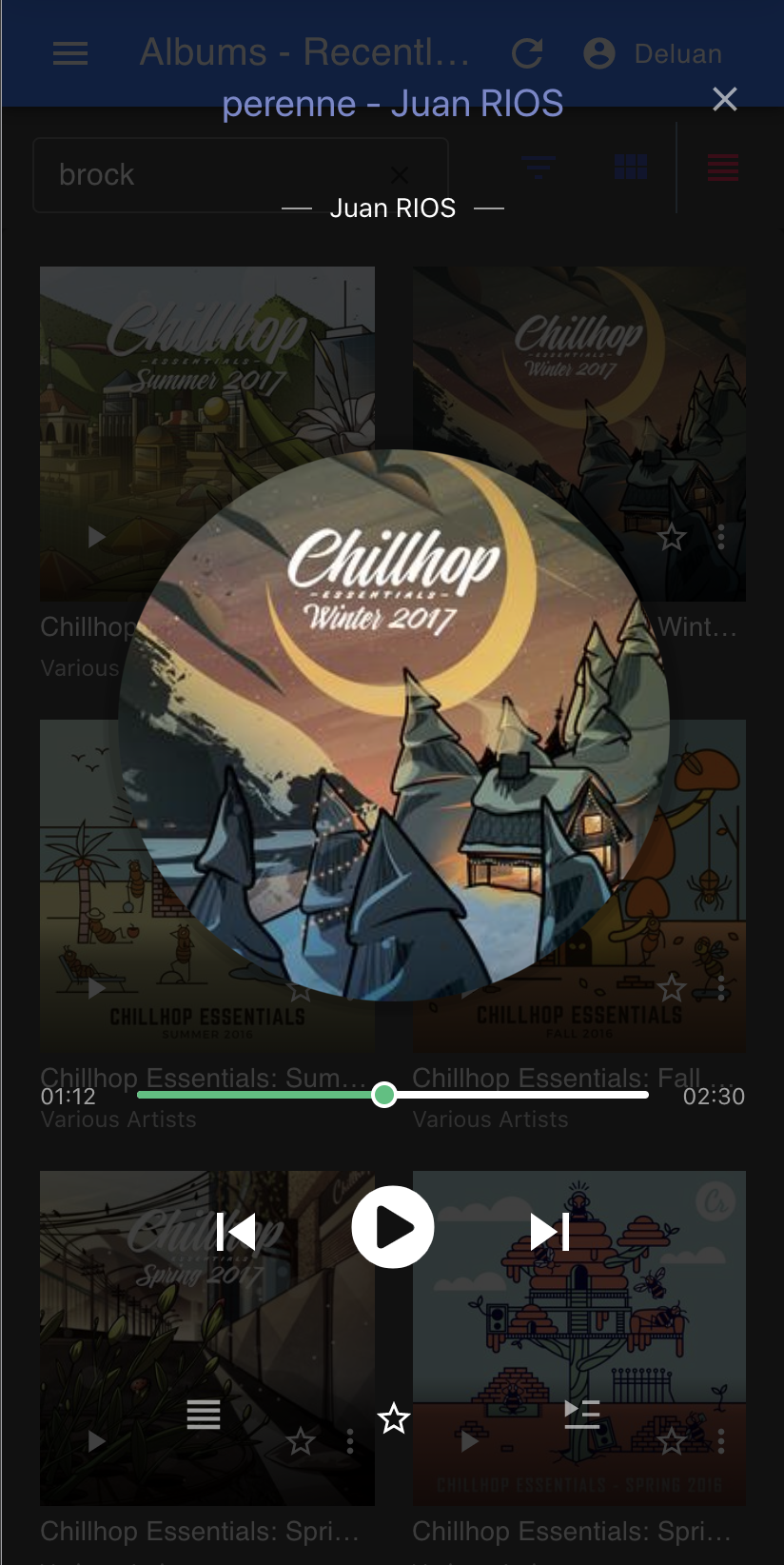
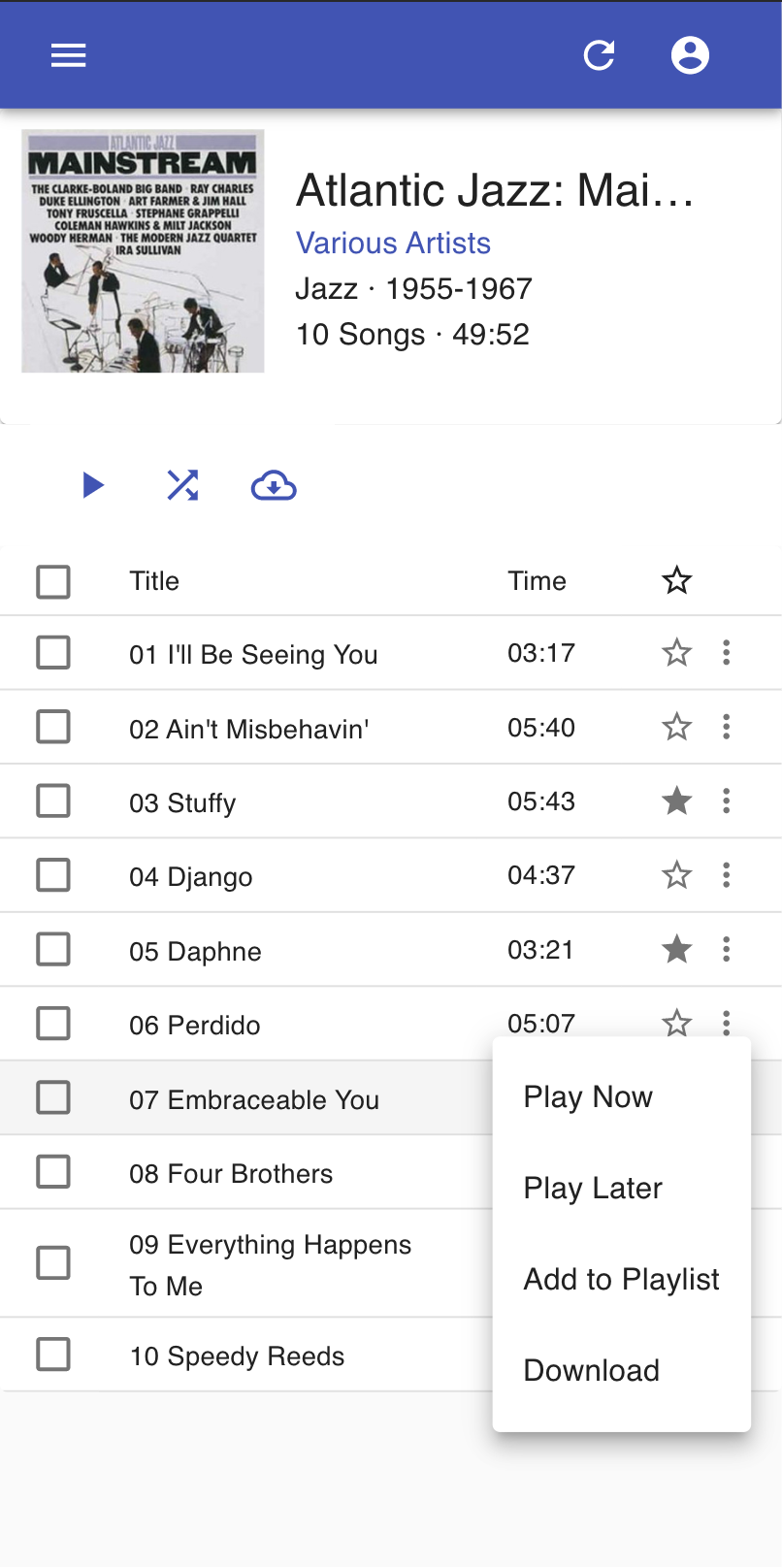
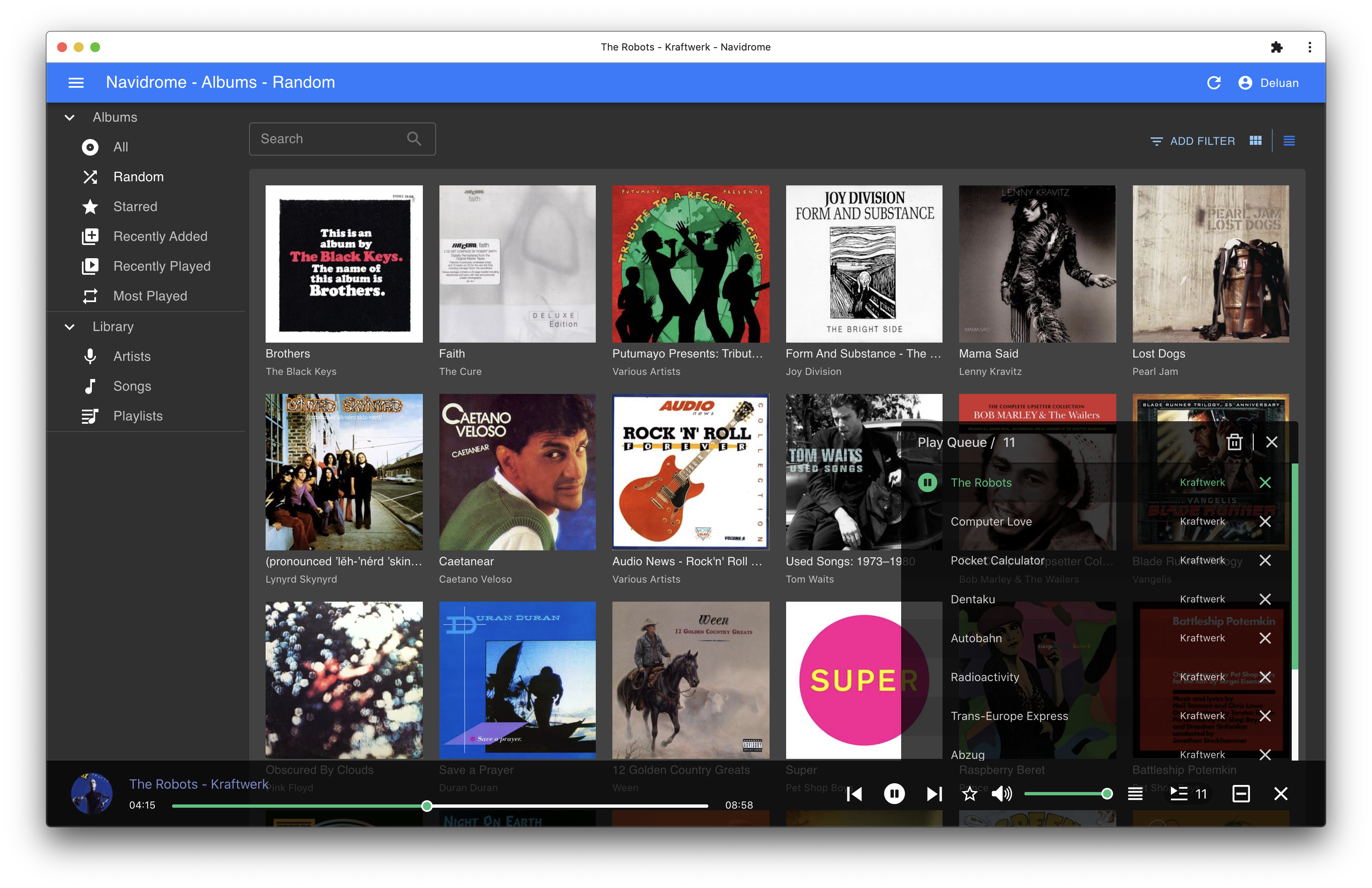
Screenshots