- Go 81.5%
- JavaScript 15.1%
- Rust 2.2%
- Go Template 0.5%
- Makefile 0.3%
- Other 0.4%
 98555ca499
Adds db/pglite, a bridge that runs the PGlite WASI build of PostgreSQL 17.5 inside the Navidrome process with wazero and exposes it to database/sql through pgx over the real wire protocol. Selected with DbPath = "pglite://<dir>". The bridge handles what the WASI build cannot do on its own: it emulates dup2 onto stdin (wazero refuses fd_renumber on preopens), replays ParameterStatus for connections after the first, synthesizes a missing ReadyForQuery after an error, recovers from the trap every PG ERROR raises, and passes wire bytes through shared wasm memory instead of files (round-trip floor 377 µs to 39 µs). Several connections are accepted and serialized onto the single backend, holding the session across a whole transaction and a whole handshake; a client that disconnects mid-transaction gets a ROLLBACK. db.go opens the pglite:// scheme, skips the SQLite-only migrations, and can apply a translated schema from ND_PGLITE_SCHEMA. The shared count() helper now adds its ORDER BY only for SQLite, since Postgres rejects it next to count(distinct ...). The wasm archive is not committed. The README explains how to build it and lists the limits found: one session, one process (DevExternalScanner must be off), shared session state, simple protocol only. |
||
|---|---|---|
| .devcontainer | ||
| .github | ||
| adapters | ||
| cmd | ||
| conf | ||
| consts | ||
| contrib | ||
| core | ||
| db | ||
| git | ||
| log | ||
| model | ||
| persistence | ||
| plugins | ||
| release | ||
| resources | ||
| scanner | ||
| scheduler | ||
| scripts | ||
| server | ||
| tests | ||
| ui | ||
| utils | ||
| .dockerignore | ||
| .git-blame-ignore-revs | ||
| .gitignore | ||
| .golangci.yml | ||
| .nvmrc | ||
| .octocov.yml | ||
| CODE_OF_CONDUCT.md | ||
| context7.json | ||
| CONTRIBUTING.md | ||
| Dockerfile | ||
| go.mod | ||
| go.sum | ||
| LICENSE | ||
| main.go | ||
| Makefile | ||
| Procfile.dev | ||
| README.md | ||
| reflex.conf | ||

Navidrome Music Server 








Navidrome is an open source web-based music collection server and streamer. It gives you freedom to listen to your music collection from any browser or mobile device. It's like your personal Spotify!
Note: The master branch may be in an unstable or even broken state during development.
Please use releases instead of
the master branch in order to get a stable set of binaries.
Check out our Live Demo!
Any feedback is welcome! If you need/want a new feature, find a bug or think of any way to improve Navidrome, please file a GitHub issue or join the discussion in our Subreddit. If you want to contribute to the project in any other way (ui/backend dev, translations, themes), please join the chat in our Discord server.
Installation
See instructions on the project's website
Cloud Hosting
PikaPods has partnered with us to offer you an officially supported, cloud-hosted solution. A share of the revenue helps fund the development of Navidrome at no additional cost for you.

Features
- Handles very large music collections
- Streams virtually any audio format available
- Reads and uses all your beautifully curated metadata
- Great support for compilations (Various Artists albums) and box sets (multi-disc albums)
- Multi-user, each user has their own play counts, playlists, favourites, etc...
- Very low resource usage
- Multi-platform, runs on macOS, Linux and Windows. Docker images are also provided
- Ready to use binaries for all major platforms, including Raspberry Pi
- Automatically monitors your library for changes, importing new files and reloading new metadata
- Supports lyrics from sidecar .ttml, .yaml/.yml Lyricsfile, .elrc, .lrc, .srt, .txt files and embedded TTML, Enhanced LRC, LRC, SRT, and plain-text tags (via
lyricspriority) - Themeable, modern and responsive Web interface based on Material UI
- Compatible with all Subsonic/Madsonic/Airsonic clients
- Transcoding on the fly. Can be set per user/player. Opus encoding is supported
- Translated to various languages
Translations
Navidrome uses POEditor for translations, and we are always looking for more contributors
Documentation
All documentation can be found in the project's website: https://www.navidrome.org/docs. Here are some useful direct links:
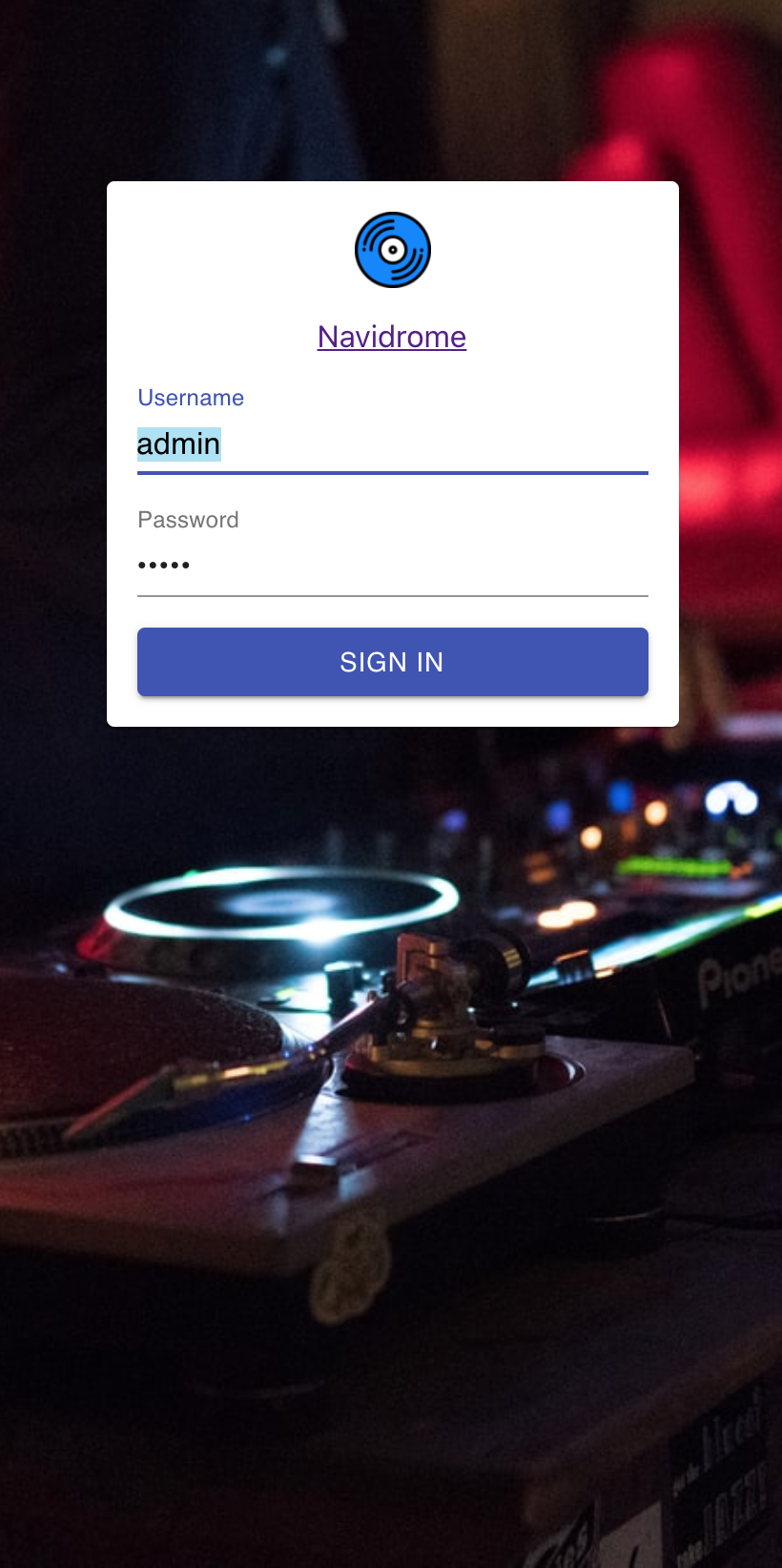
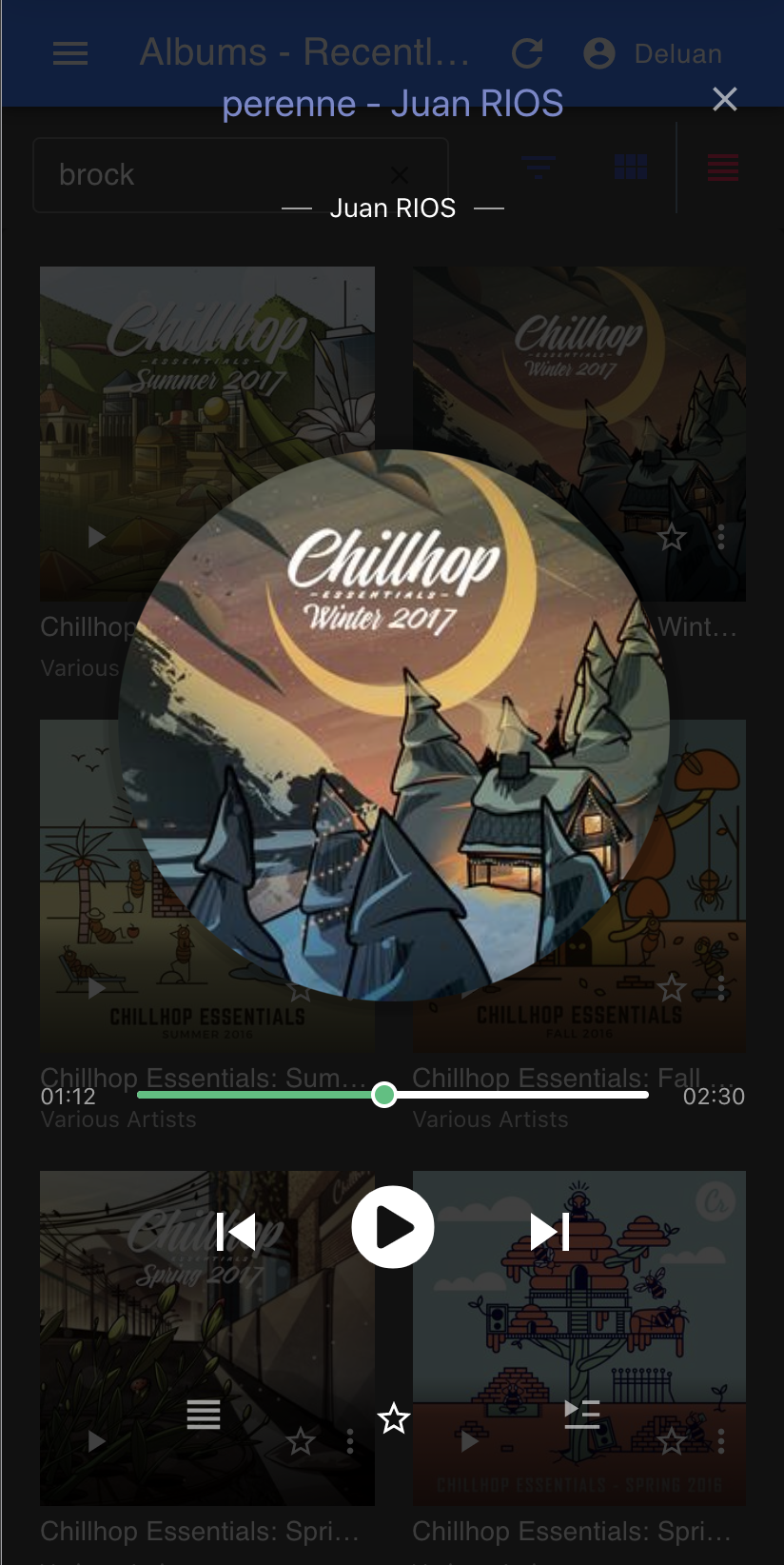
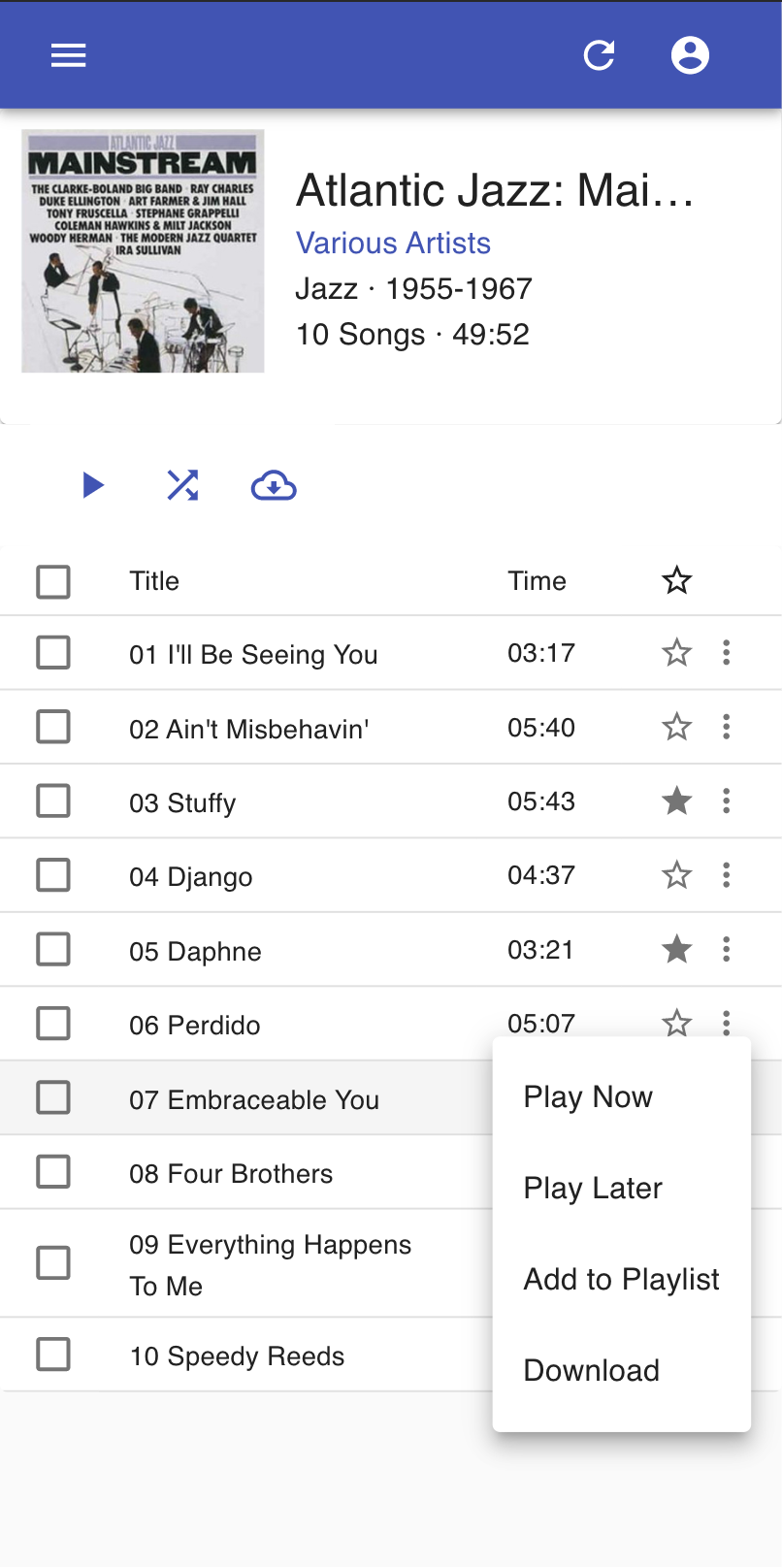
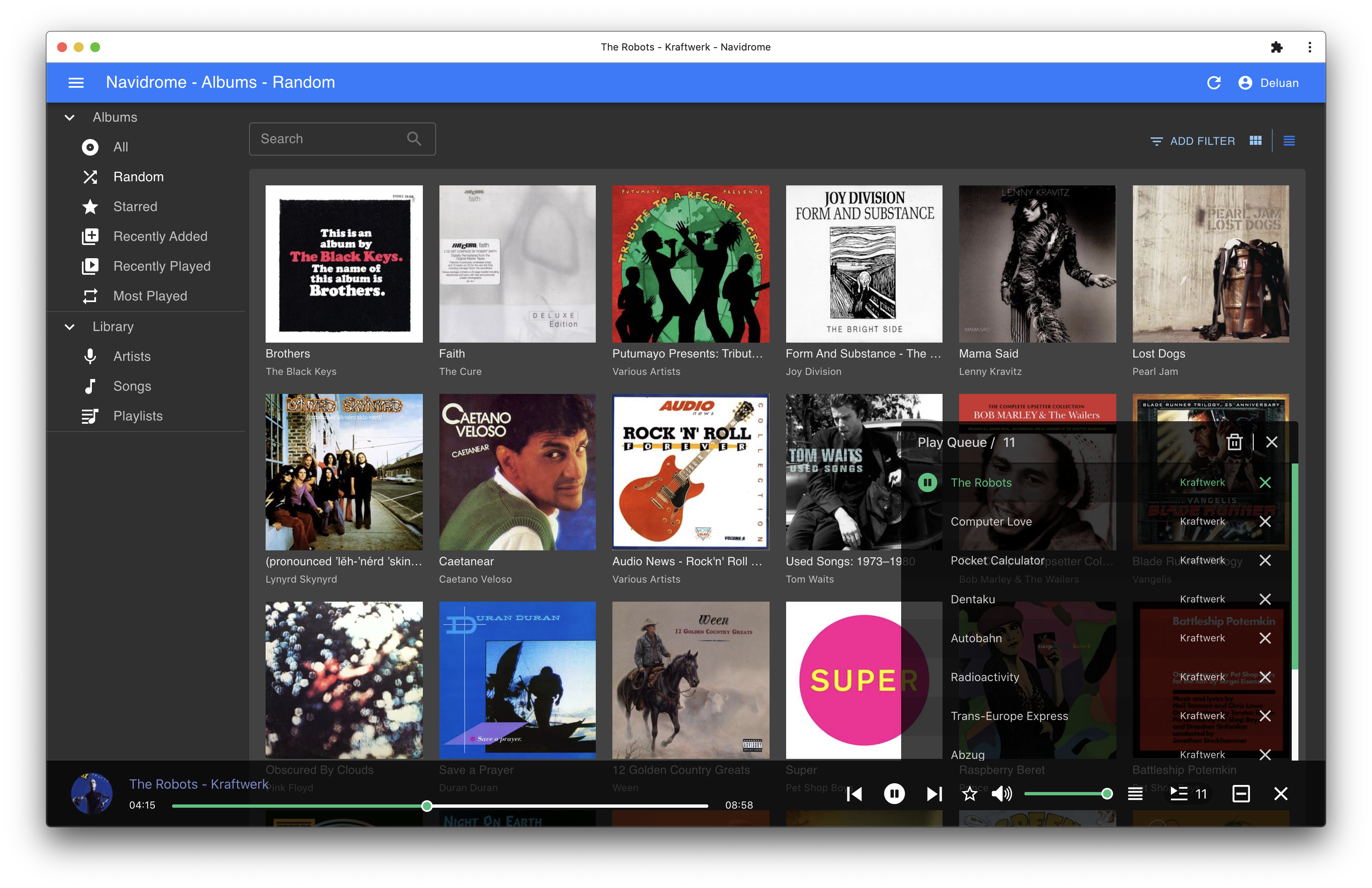
Screenshots