- Go 81.5%
- JavaScript 15.1%
- Rust 2.2%
- Go Template 0.5%
- Makefile 0.3%
- Other 0.4%
 b76ae14286
* feat(jellyfin): add Quick Connect sign-in Jellyfin clients can now sign in without a password: the client shows a 6-digit code, a signed-in user approves it, and the client redeems a secret for its access token. - core/quickconnect: in-memory store shared by both routers through wire. Codes expire after 10 minutes; a secret redeems only once (Jellyfin allows repeats for 10 minutes); at most 1000 pending requests. - Jellyfin API: Initiate, Connect, Authorize and AuthenticateWithQuickConnect. Admins may approve for another user via UserId, like Swiftfin's admin page. Initiate and redeem share the login rate limiter; Connect does not, since Finamp and Streamyfin poll it every second. - Web UI: a Quick Connect item in the user menu looks up the code and shows the app and device before approving, so a user can't be tricked into approving an unknown device blindly. - Jellyfin.QuickConnect option, on by default like Jellyfin. It only matters when the Jellyfin API is enabled. * refactor(jellyfin): tidy Quick Connect naming and route guards Group the Quick Connect routes under one requireQuickConnect guard, make the request's device a named field so req.Device.ID can't be mistaken for a request id, and rename the web API response type to quickConnectDevice. * refactor(jellyfin): remove duplicated Jellyfin date formatting function * test(jellyfin): set play count and starred in the song fixture literal * refactor(jellyfin): inline the Quick Connect redeem body and use the shared date helper * fix(jellyfin): bound the client fields Quick Connect keeps in memory Initiate is unauthenticated and keeps the Client, Device, DeviceId and Version header fields for up to ten minutes. With no header size limit, each pending request could hold about 1 MB, and even a short field kept the whole header alive because the parsed values are substrings of it. Reject fields over 512 bytes and copy the stored values. Also answer 500 instead of 401 when the redeem user lookup fails for a reason other than the user being gone. * fix(jellyfin): rate-limit Quick Connect code approval Any signed-in user could try codes without limit on the Jellyfin Authorize endpoint and the web UI lookup/authorize endpoints, and so could approve another person's pending device for their own account. Apply the same per-IP limiter as the login (AuthRequestLimit/AuthWindowLength) to both surfaces. |
||
|---|---|---|
| .devcontainer | ||
| .github | ||
| adapters | ||
| cmd | ||
| conf | ||
| consts | ||
| contrib | ||
| core | ||
| db | ||
| git | ||
| log | ||
| model | ||
| persistence | ||
| plugins | ||
| release | ||
| resources | ||
| scanner | ||
| scheduler | ||
| scripts | ||
| server | ||
| tests | ||
| ui | ||
| utils | ||
| .dockerignore | ||
| .git-blame-ignore-revs | ||
| .gitignore | ||
| .golangci.yml | ||
| .nvmrc | ||
| .octocov.yml | ||
| CODE_OF_CONDUCT.md | ||
| context7.json | ||
| CONTRIBUTING.md | ||
| Dockerfile | ||
| go.mod | ||
| go.sum | ||
| LICENSE | ||
| main.go | ||
| Makefile | ||
| Procfile.dev | ||
| README.md | ||
| reflex.conf | ||

Navidrome Music Server 








Navidrome is an open source web-based music collection server and streamer. It gives you freedom to listen to your music collection from any browser or mobile device. It's like your personal Spotify!
Note: The master branch may be in an unstable or even broken state during development.
Please use releases instead of
the master branch in order to get a stable set of binaries.
Check out our Live Demo!
Any feedback is welcome! If you need/want a new feature, find a bug or think of any way to improve Navidrome, please file a GitHub issue or join the discussion in our Subreddit. If you want to contribute to the project in any other way (ui/backend dev, translations, themes), please join the chat in our Discord server.
Installation
See instructions on the project's website
Cloud Hosting
PikaPods has partnered with us to offer you an officially supported, cloud-hosted solution. A share of the revenue helps fund the development of Navidrome at no additional cost for you.

Features
- Handles very large music collections
- Streams virtually any audio format available
- Reads and uses all your beautifully curated metadata
- Great support for compilations (Various Artists albums) and box sets (multi-disc albums)
- Multi-user, each user has their own play counts, playlists, favourites, etc...
- Very low resource usage
- Multi-platform, runs on macOS, Linux and Windows. Docker images are also provided
- Ready to use binaries for all major platforms, including Raspberry Pi
- Automatically monitors your library for changes, importing new files and reloading new metadata
- Supports lyrics from sidecar .ttml, .yaml/.yml Lyricsfile, .elrc, .lrc, .srt, .txt files and embedded TTML, Enhanced LRC, LRC, SRT, and plain-text tags (via
lyricspriority) - Themeable, modern and responsive Web interface based on Material UI
- Compatible with all Subsonic/Madsonic/Airsonic clients
- Transcoding on the fly. Can be set per user/player. Opus encoding is supported
- Translated to various languages
Translations
Navidrome uses POEditor for translations, and we are always looking for more contributors
Documentation
All documentation can be found in the project's website: https://www.navidrome.org/docs. Here are some useful direct links:
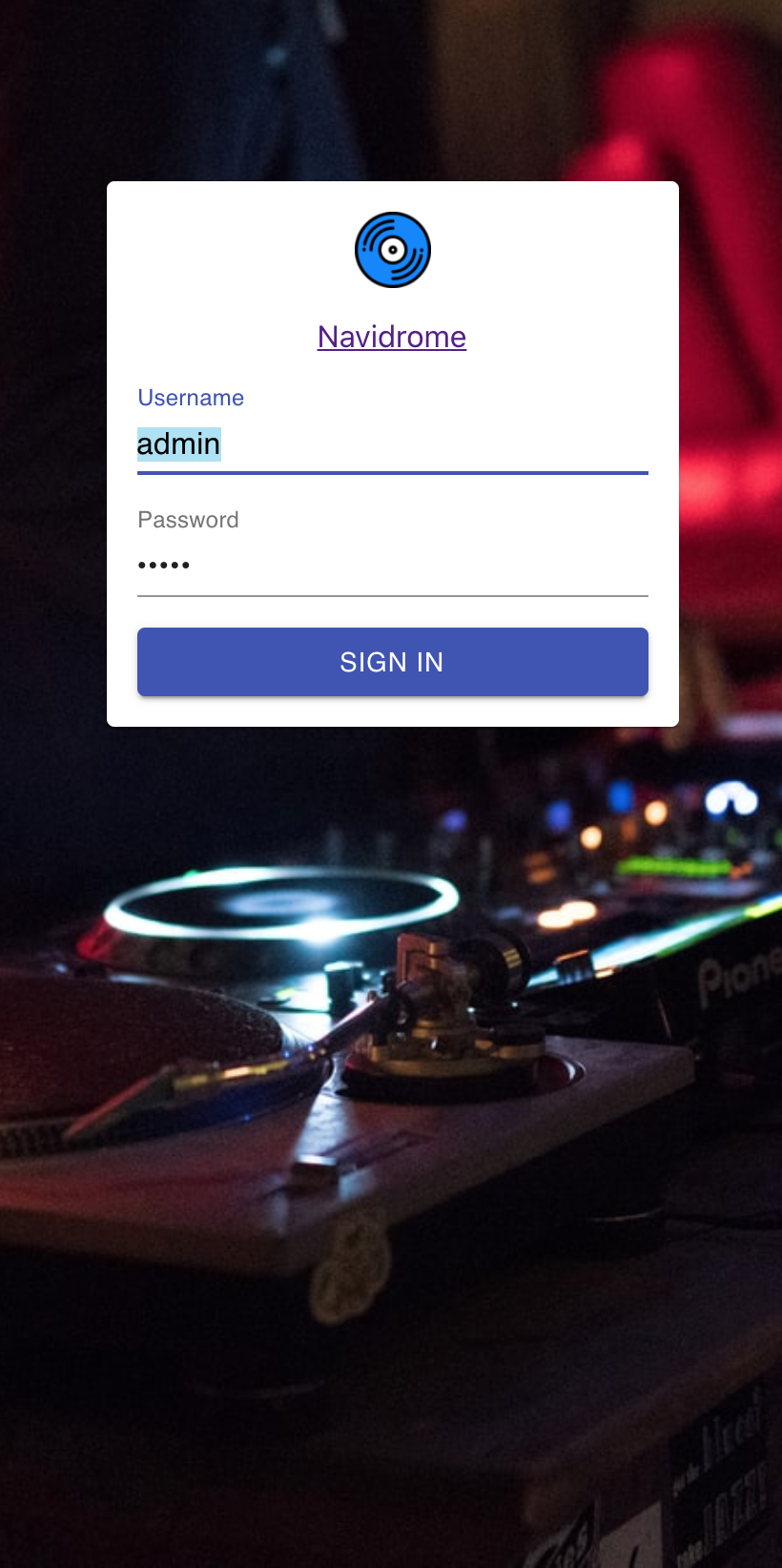
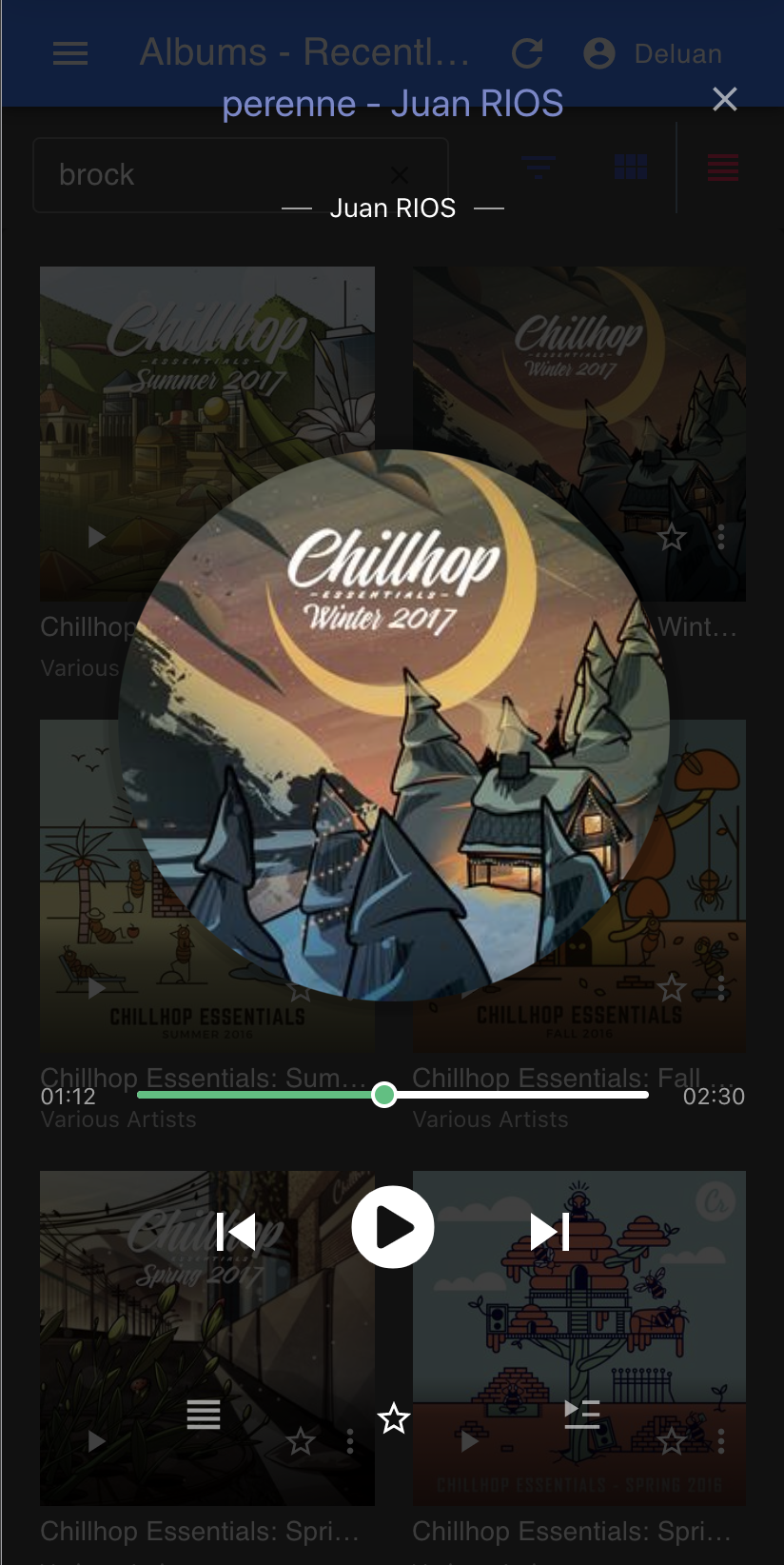
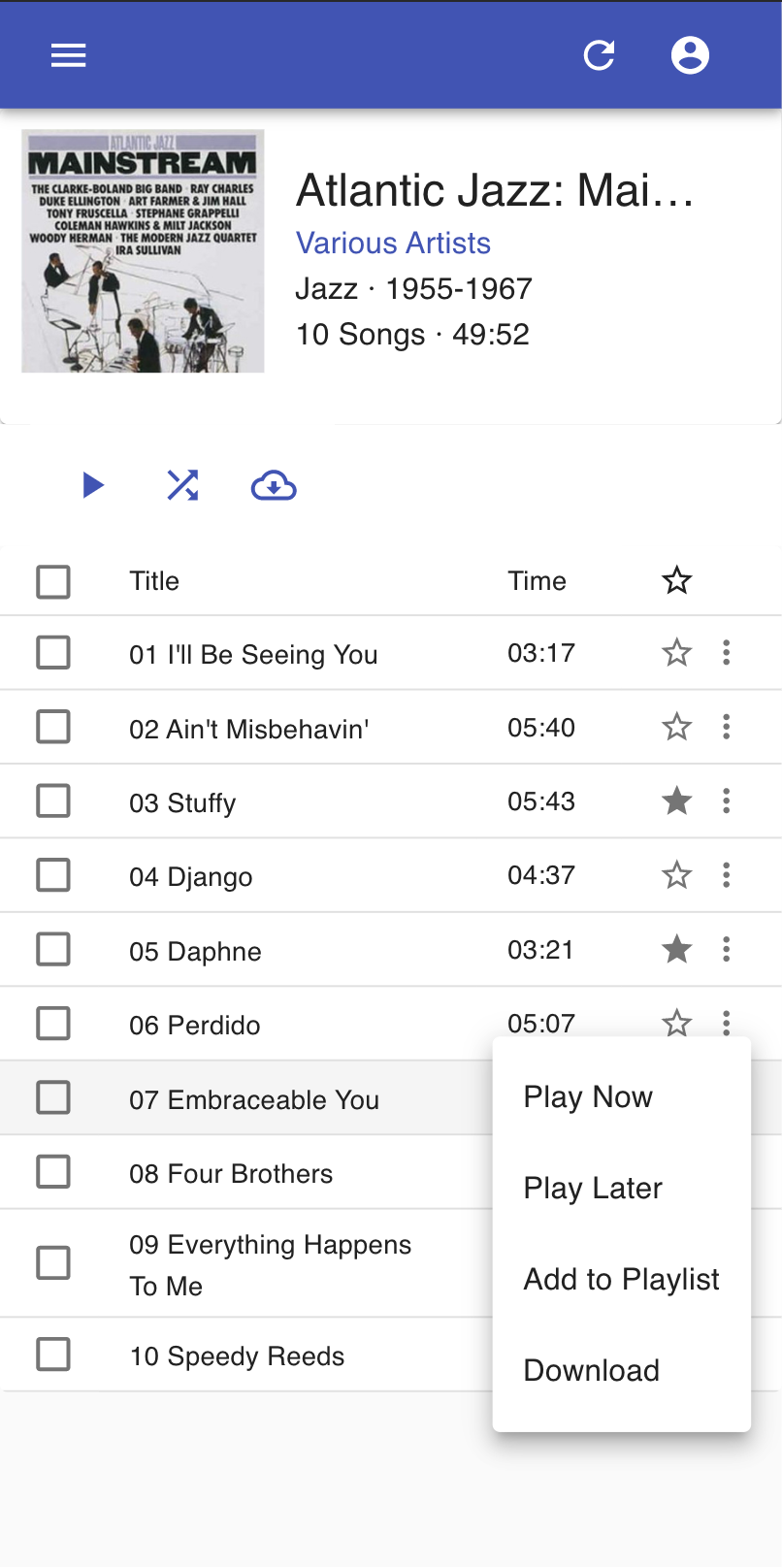
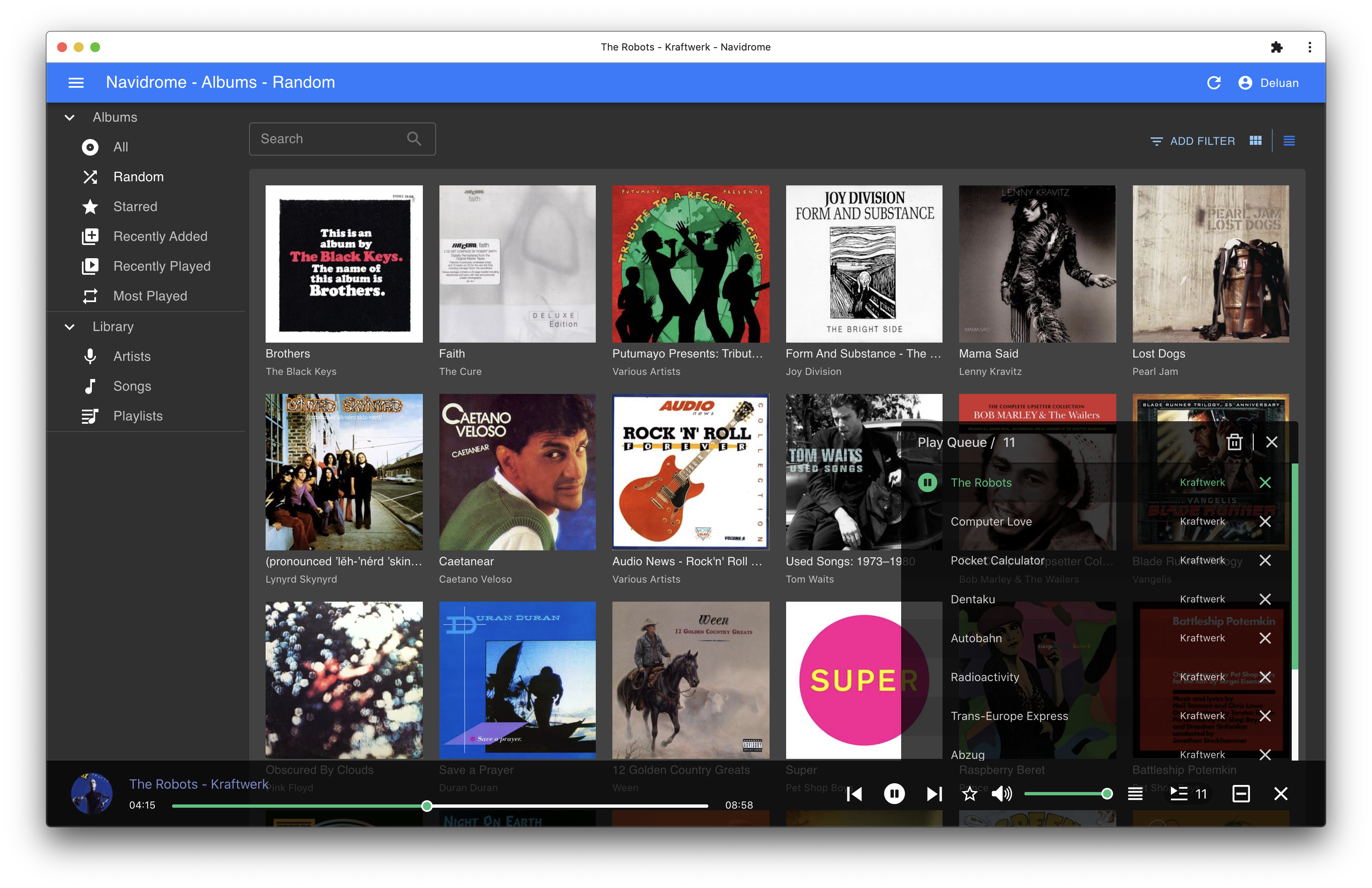
Screenshots